
The Full Story
Agroforestry & Orchard

Overview
At Wai & ʻĀina, one of our long-term land stewardship goals is to develop the orchard area into a productive hybrid agroforestry & orchchard demonstration space. The concept for this site is to combine a traditional fruit orchard with a more diverse agroforestry planting, showing how food production, soil health, biodiversity, and visitor education can work together in one integrated system.
This area is being planned as a mixed-species planting rather than a single-crop orchard. By combining fruit trees, support species, and living groundcovers, the system is designed to improve soil health, make better use of space, and create a more resilient growing environment over time. Peanut grass is one of the key groundcovers being used because it fixes nitrogen, protects the soil, provides useful fodder, and has shallow roots that do not heavily compete with orchard trees.
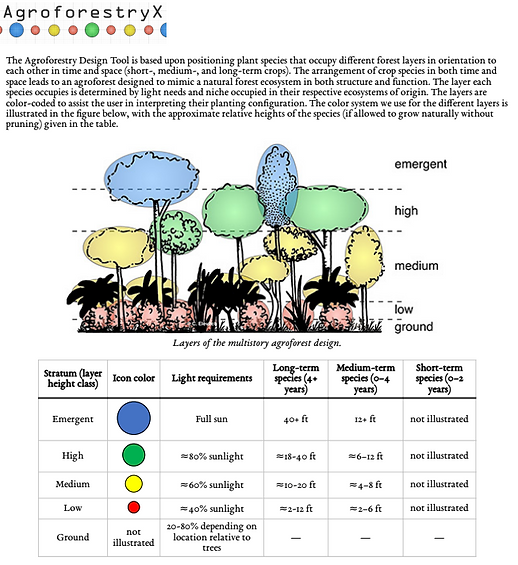
The long-term vision is for this space to become both a productive orchard and an educational landscape. As the plantings mature, the area could function as an exotic fruit forest walk or nature walk where visitors can learn about agroforestry, tropical fruit production, and regenerative land stewardship. The tree layout was developed with support from the Agroforestry X program, which helped guide the design and placement of trees throughout the site.
How We Implement It
This project is being developed as a mixed orchard and agroforestry demonstration area. Rather than planting the space as a single-species orchard, the design combines fruit trees, support plants, and living groundcover to create a more diverse and resilient system over time.
Peanut grass is one of the key groundcovers used in this area. It helps keep the soil covered, fixes nitrogen, provides potential fodder, and has shallow roots that do not heavily compete with the deeper roots of orchard trees.
The tree layout was developed with support from the Agroforestry X program, which helped guide the placement and organization of the planting area. As the system develops, diagrams and photos from the planning process can help show how the orchard and agroforestry areas are arranged and how the space is expected to mature.

What We Grow
Our agroforest and orchard are planted with a diverse mix of 'ulu, citrus, coconuts, and other tropical and exotic fruit trees. The goal is to create a productive, walkable landscape where people can gather fruit, learn about tropical agriculture, and experience how trees, animals, and people can work together in a living farm system.
The orchard currently includes approximately 25 fruit trees and more are to be added as time goes on.
Animals are also part of the orchard system. Sheep help keep weeds down between the trees and are gentler on bark than cows or goats, making them better suited for spaces where people are also walking and gathering fruit. Babydoll sheep have historically been used in vineyards for a similar purpose. Fruit waste can also be cycled back into the farm system — citrus peels are difficult to compost easily, but the cows love them.
Long-Term Vision
The long-term vision for the agroforest and orchard is to create a welcoming space for community gathering, fruit production, and hands-on interaction with the land. The area is being planned with pathways, a gazebo, and an open field large enough for activities like volleyball, while still maintaining the feel of a lush orchard filled with tropical and exotic fruit trees.
As the orchard grows, the goal is to create a tropical U-pick fruit experience where visitors can walk through the trees, gather fruit in season, and enjoy the landscape as both a productive farm space and a place to spend time together. Over time, the agroforest can become a space that brings together food, animals, and community in a way that is interactive, inviting, and connected to the land.
